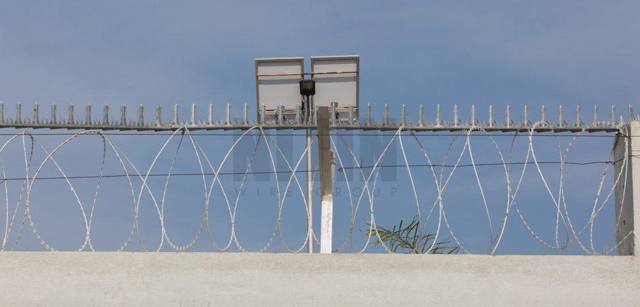
Razor panel
Welded razor-blade mesh panels for perimeters where security comes first.
Updated 16 October 2026 · Made by Nitin Wire Group, Chennai · +91 91591 43131
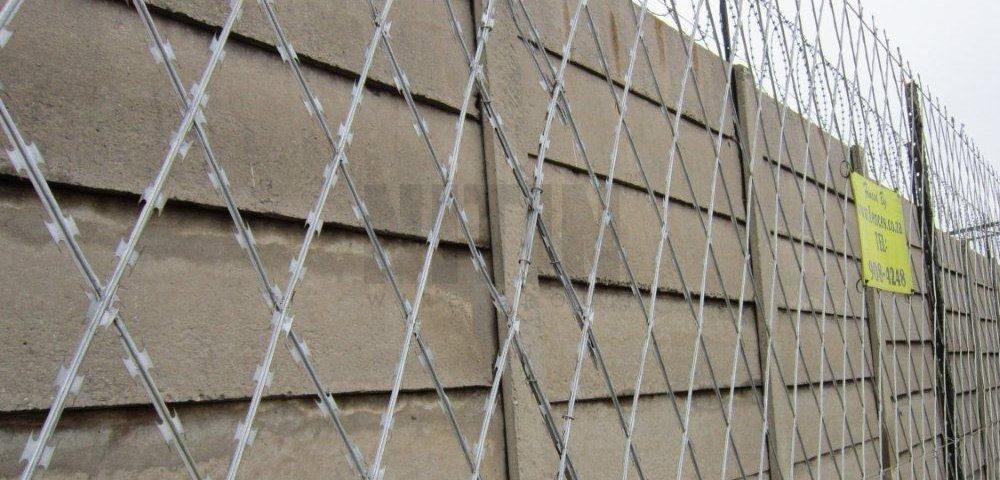
Razor Panel in the field
Real installations and close-ups. Tap a photo to enlarge it.
Razor Panel specifications
| Construction | Straight-blade razor wire welded into mesh |
|---|---|
| Core | High-tensile galvanised steel |
| Standard sizes | 1.2 m × 2 m, 1.8 m × 2 m |
| Supply form | Flat sheets |
What makes it work
- Rigid welded mesh
Razor wire welded into a sheet forms a stiff barrier rather than a loose coil.
- Hard to climb or cut
Blades on every strand leave no safe hand- or foothold.
- Galvanised high-tensile core
Gives the panel durability and keeps its shape.
- Standard sheet sizes
Supplied flat in 1.2 × 2 m and 1.8 × 2 m sheets for quick planning.
Razor Panel applications



Razor Panel: questions buyers ask
What sizes do razor panels come in?
Nitin razor panels come in standard sizes of 1.2 m × 2 m and 1.8 m × 2 m. To estimate quantity, divide the fence length by 2 m and round up: a 100 m run needs 50 panels.
What is the difference between razor panel and concertina coil?
Concertina coil is razor wire formed into loose loops that stretch along a wall or fence. A razor panel is razor wire welded into a flat, rigid mesh sheet that can stand as the fence itself. Panels give a neater, fixed barrier; coils are quicker to add on top of existing walls.
Where is razor panel fencing used?
Razor panel fencing is used where security is the main concern: industries, airports, embassies, government institutions, substations and storage yards. It is often combined with concertina coil on top or along the base for a layered perimeter.
How are razor panels installed?
Razor panels are usually fixed between steel posts or frames with clamps or bolts, much like other welded mesh panels. Installers should wear cut-resistant gloves and protective clothing, because every strand of the panel carries sharp blades.
Is a razor panel suitable for a house?
Razor panels are designed for high-security sites and can look severe around a home. For residential compound walls, wall spikes or a single row of concertina coil are more common and less imposing.